Forest Ecologist Answers Tree Questions | Tech Support | WIRED


Channel: WIRED
Uploaded by WIRED on 20260714
Categories: Entertainment
Tags: amazon forest, amazon rainforest, avatar tree real life, ecologist answers, forest fire, forest fire 101, forest fire california, forest q and a, how rainforests work, how trees communicate, how trees talk, mrbeast trees, oldest tree in the world, rain forest, rainforest, teamtrees, tech support, tree expert answers, tree q and a, what causes forest fires, what tree rings mean, wired, wired biologist, wired scientist, wired tech support
Forest conservation scientist Dominick DellaSala joins WIRED to answer the internet’s burning questions about trees. What did ancient forests look like? What do tree rings really prove? Do rainforests create rain or does rain create rainforests? Answers to these questions and many more await on Forest Support. WIRED recommends: h

In this video from WIRED, forest ecologist Dominic Dellasala answers various questions about trees, forest ecosystems, wildfires, and forest management from the internet.

Below is a detailed breakdown of the topics covered in the video, organized by the specific questions addressed:

1. The "Mother Tree" and Forest Ecosystems

The Question: A user references the "Mother Tree" from the movie Avatar and wishes it existed. [00:11]

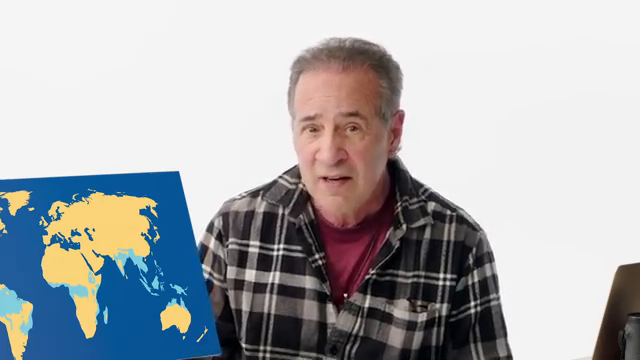
The Explanation: Dellasala compares this concept to the Borneo rainforest, where bioluminescent fungi light up the forest floor at night [00:25]. He introduces the concept of the Wood-Wide Web, highlighting the work of scientist
Image for chunk 1

Susan Simard [02:12].

The Mechanism: Trees connect and communicate chemically through mycorrhizal networks—fungal systems attached to plant roots [02:20]. The closer the genetic relationship between a mother tree and its progeny, the more connected their underground network is [02:45]. Trees also warn each other of threats; for example, when under insect attack, they can release pitch to trap invaders, signaling nearby trees to prepare their chemical defenses [02:53].

2. Natural Forest Regeneration After Fires

The Question: How do forests naturally regenerate after fires? [00:53]

The Explanation: Severe wildfires are not always ecological catastrophes

Image for chunk 2

[01:03]. Some tree species depend entirely on heat to reproduce:

Serotinous cones: Found on species like the lodgepole pine, these cones require intense heat to burst open and release seeds into the nutrient-rich ash [01:12].

Sprouting/Seed Rain: Other trees, such as the madrone, take immediate advantage of the post-fire environment to sprout and drop seeds to establish the next generation [01:19].

3. Ancient vs. Modern Forests

The Question: What did ancient forests look like? [01:42]

The Explanation: During the era of the dinosaurs, forests consisted of gymnosperms rather than angiosperms (flowering plants had not yet fully developed) [01:42]. A mod

Image for chunk 3

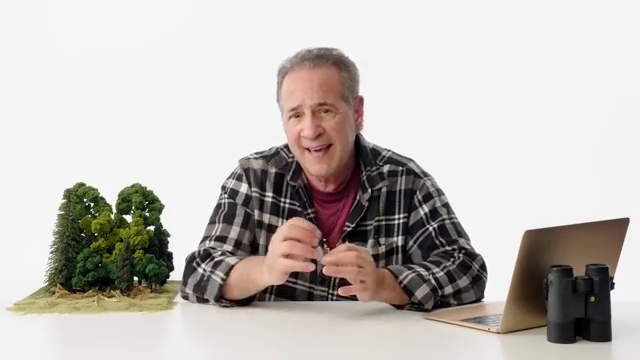
ern example of an ancient gymnosperm lineage is the Monkey Puzzle tree, which is covered in sharp, dense needles to deter climbing [01:55].

4. Wildfires in California and Home Safety

The Question: Why are there so many forest fires in California? [03:15]

The Explanation: Fires have naturally burned in California for millennia. In Southern California, severe fires are often driven by the high-velocity Santa Ana winds sweeping through chaparral and shrubby grasslands [03:21]. These fires are vital for clearing ecosystem buildup and prompting seed development [03:38].

Home Protection: To mitigate property damage where wildlands meet communities, homeowne

Image for chunk 4

rs should [03:56]:

Use composite or metal materials for roofing.

Install screens on open ventilation vents to stop embers.

Clear a defensible space of 50 to 100 feet around the home to prevent flames from jumping from wild vegetation to structures.

5. Exploding Trees

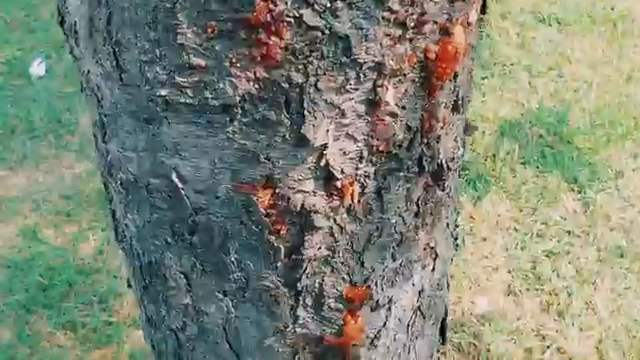
The Question: A user asks why their tree "exploded." [04:24]

The Explanation: The ecologist identifies the Sandbox tree, a toxic tree with leaves and spines dangerous to humans [04:31]. It reproduces by forcefully ejecting its seeds at incredibly high velocities, which can sound like an explosion and cause physical injury [04:39].

6. Forest Management & Political Claims

The Question: Is D

Image for chunk 5

onald Trump correct about "cleaning up" debris and raking the forest floor? [04:46]

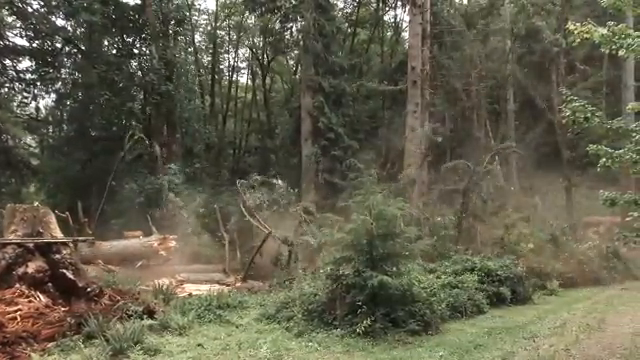
The Explanation: Dellasala refutes this claim, clarifying that what is being proposed under executive logging orders is often clear-cut logging rather than simple floor maintenance [05:01].

The Risks of Logging: Taking down large, old trees removes the most naturally fire-resistant parts of the forest [05:55]. Furthermore, commercial logging leaves behind "logging slash" (twigs, dry branches, and leaves), which acts as optimal kindling, ultimately making forests more prone to fast-moving fires [05:35].

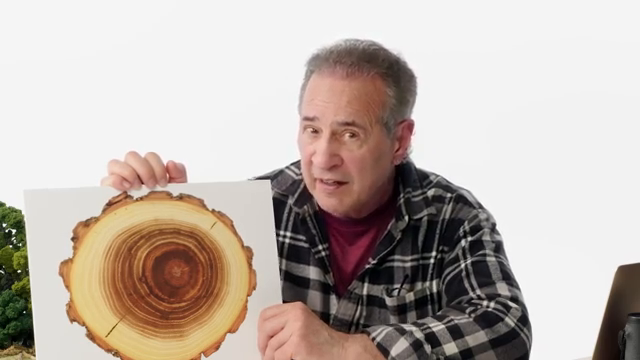
7. Reading Tree Rings

The Question: What do tree rings actually pro

Image for chunk 6

ve? [06:04]

The Explanation: Tree rings provide a historical record of a tree's growth patterns [06:10].

Tight rings: Indicate poor growth conditions, such as drought years [06:16].

Wide rings: Indicate favorable, wet, or resource-rich growth years [06:22].

Circulatory System: The outermost living section contains the xylem and phloem, which transport water and nutrients [06:28].

Fire Scars: Thick bark insulates trees from fire, but actual fire events leave distinct physical scars across the rings, allowing scientists to pinpoint the exact year a historic fire occurred [06:42].

8. The Smokey Bear Effect

The Question: Is Smokey Bear right that 9 out of

Image for chunk 7

10 wildfires are caused by humans? [07:04]

The Explanation: Nationally, the statistic is accurate; 90% of wildfires are human-caused due to high road densities and population centers encroaching on wild areas [07:17]. However, the campaign's historical policy—putting out every single fire start by 10:00 AM the next day—has been ecologically destructive, causing unnatural fuel buildup and blocking the natural rejuvenation cycle [07:30].

9. Climate Change & Tree Planting Projects

The Question: How much of a dent will projects like MrBeast's 20 million trees make on climate change? [07:59]

The Explanation: Planting new trees is beneficial, but it does n

Image for chunk 8

ot substitute for protecting existing old-growth forests [08:09]. Old-growth trees serve as massive atmospheric carbon sinks, storing centuries of accumulated carbon in their trunks and roots [08:25]. Planting fragile seedlings takes hundreds of years to achieve the same carbon-mitigation impact [08:41].

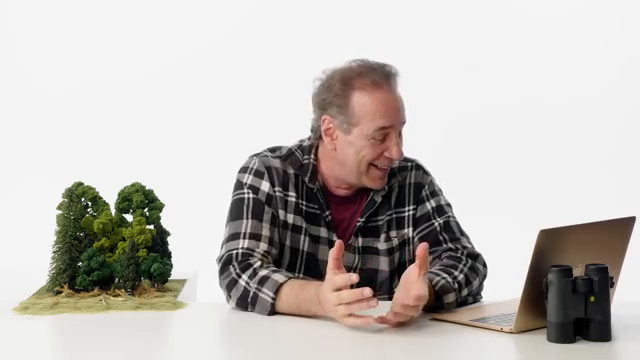
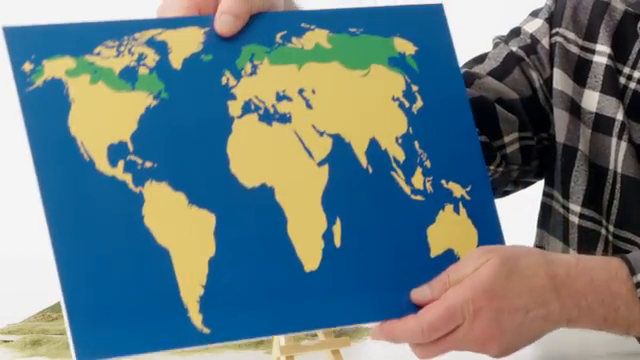
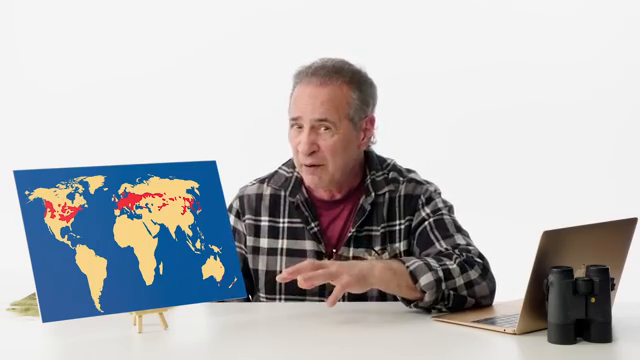
10. Forest Ecosystem Zones

The Question: A user asks for clarification on different types of forests, specifically the boreal forest. [08:45]

The Explanation: The video details the primary latitudinal forest zones across the globe [08:58]:

[ ARCTIC CIRCLE ]

|

v

+-----------------------------+

| BOREAL ZONE

Image for chunk 9

| -> Cold, heavy snow. Conifers (pines), aspens.

| (e.g., Sub-Arctic Green Belt) | Breeding ground for ~1 billion migratory birds.

+-----------------------------+

|

v

+-----------------------------+

| TEMPERATE ZONE | -> Mid-latitudes (e.g., Appalachian/Pacific Crest).

| | Biodiverse mixture of oaks, conifers, aspens.

+-----------------------------+

|

v

+-----------------------------+

| TROPICAL ZONE | -> Southern Hemisphere/Equator. Very wet, hot.

| (e.g., Amazon Basin) | Highly localized and unique species.

+-----------

Image for chunk 10

------------------+

Rainforest Sub-Types: Rainforests are defined by high rainfall, not tree height [11:06]. While temperate rainforests in Washington or Alaska feature massive trees over 200 feet tall [10:04], temperate rainforest fragments in the UK feature short canopy trees averaging only 30 feet tall [10:48].

11. Single-Organism Forests

The Question: Is there a forest that is a single living organism? [11:11]

The Explanation: Yes, certain forests behave as interconnected super-organisms [11:19]. An entire aspen forest can originate from a single parent tree that expands outward by sending underground runners (suckers) through the soil to sprout i

Image for chunk 11

dentical trees [11:26].

12. Deforestation and the State of Global Forests

The Question: Are there more trees on Earth now than ever before? [12:29]

The Explanation: This claim is entirely false [12:35]. Centuries of expanding deforestation have reduced global forest cover to just one-third of its historical pre-deforestation levels [12:42]. Furthermore, only 28% of current remaining forests are considered primary forests (unlogged, virgin old-growth) [12:57].

13. The Amazon Rainforest Crisis

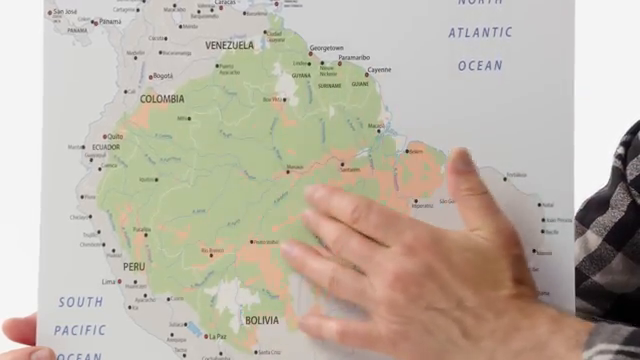
The Question: Are they still burning down the Amazon? [13:51]

The Explanation: Widespread burning and clear-cutting continue, primarily to convert the land into c

Image for chunk 12

attle pastures [14:09].

The Feedback Loop: Rainforests actively generate their own rainfall through evapotranspiration [13:30]. Removing large swaths of trees disrupts the water cycle, inducing severe regional droughts. If current rates continue alongside global climate change, the Amazon basin could completely flip into a dry, drought-stricken savanna within the next few decades [14:22].

14. Biological Processes & Competition

Photosynthesis & Storage: Trees absorb CO

2

via photosynthesis, converting it into food and long-term carbon storage within their structural wood and roots [15:20].

The Smell of Pine: The scent of a pine forest comes from terpe

Image for chunk 13

nes, chemical compounds released by trees under environmental stress [15:58]. Certain wood-boring beetles detect these terpenes to target and accelerate the death of weakened trees, which ultimately provides vital habitat and recycles nutrients back into the soil [16:11].

Tree Height Limits: Trees like the Coast Redwood stop growing vertically (often around 300+ feet) because their internal vascular plumbing (xylem/phloem) struggles to pump water and nutrients higher against gravity [18:55]. They overcome this limit by living in coastal fog belts to absorb moisture directly through the upper canopy [19:15].

Tree Farms vs. Natural Forests: Tree farms a

Image for chunk 14

re timber-yielding monocultures planted uniformly in rows containing trees of a single age, lacking structural diversity or wildlife habitat [19:53]. Natural forests are complex ecosystems consisting of varied tree species, diverse age structures, and intricate wildlife interactions [20:10].

Allelopathy: Trees actively compete for light and nutrients [21:06]. Some plants utilize allelopathy, a biological defense mechanism where they excrete specific chemicals into the surrounding soil to terminate competing vegetation [21:37].

URL: https://www.youtube.com/watch?v=fLIZslgfIdQ

Forest Ecologist Answers Tree Questions | Tech Support | WIRED

WIRED · 59K vi

Image for chunk 15

Viewer Discussion & Comments

@kaloncpu57
It's so funny to put Zen's "question" in here when it was straight up lightning actually exploding the tree
@abelboeschoten7397
The Botany episode was my favourite one so far, excited for this one, please more nature/ecology based videos!! Thank you!
@Rei-nx8sx
We need a Coral Ecology support episode!!!!
@ArmoredKong
4:26 ZEEEEEN
@key2010
Probably the only YouTube series tha i wish it wasn't edited :(